
date » 06-05-2024 16:28
permalink » url
tags » storia fotografia, linguaggio fotografico, fotografia tutti, tutti fotografi, calvenzi fotografia, società e fotografia umida, thumberwald,
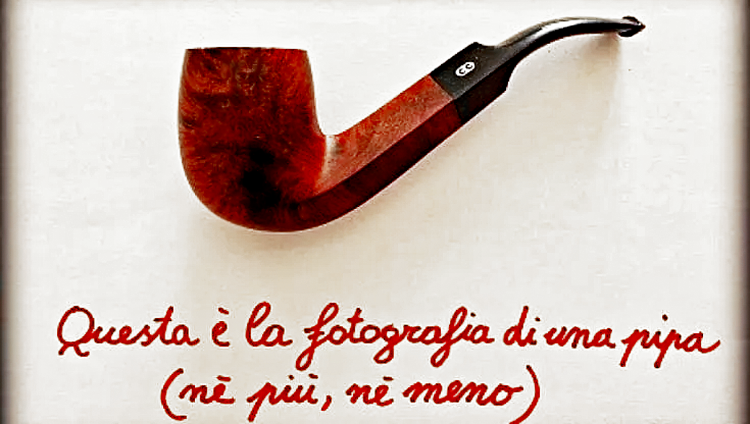

La fotografia è coetanea, anzi è sorella di sangue dell’era della rivoluzione industriale, del capitalismo imperialista, degli stati nazionali, del colonialismo, della mercificazione integrale del pianeta...
(https://www.repubblica.it/cultura/2023/06/16/news/la_fotografia_e_morta_fotocrazia_ritorna-404726934/)
https://www.facebook.com/watch/live/?ref=watch_permalink&v=545783170715762
date » 22-04-2024 19:12
permalink » url
tags » pentax nuova fotocamera analogica, penatx, ashai pentax logo, cancel culture, fotografia analogica anni sessanta, stampa fotografica bagno, stampa fotografica camera letto, non moriremo digitali, pentax film project, pintor manifesto, zenza bronica sq seipersei, thumberwald,
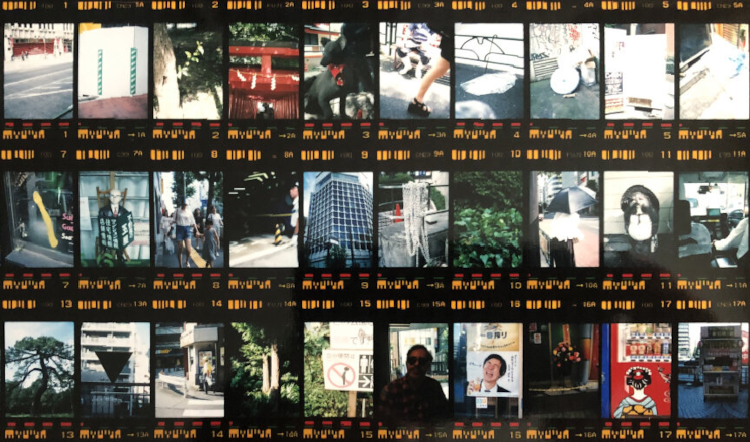
Non moriremo digitali, mah
Sì memoria qui non falla a proposito del post i “telefonini ci seppelliranno”. Vero ma il titolo rifà Pinto (lucido pensatore comunista tutto d'un pezzo che dopo invasione d'agosto 1968 dei "compagni" russi in Cecoslovacchia, uscito da Pci per fondare con Rossanda Valentino Parlato ed altri il giornale Manifesto, scritto in italiano come Iddio comanda!) circa il fatto di non morire in illo tempore Democristiani, che i nuovi ruminanti a pascolo brado ma eterodiretti che manco conoscono: storie del Novecento, sicuro. E che più del Cancel Culture nun ce ne po’ fregà de meno, dicono le nuove leve: che dire?
Stacchetto della regia: mia nipote ha due mamme, proprio così, la biologica, certo, e aggiunta la signora “coniuge”. E dicevo, a paragone, alla nipote come Ottaviano Del Turco (vedevo la nipote guardare ora qua ora là) l’allora segretario, ma aggiunto (coniuge del caso doppia mamma) della CGIL. Sindacato che per tradizione spettava a un comunista, mentre Ottavio era del Psi (Partito Socialista Italiano, da cui nel 1921** si stacco un parte per formare il Partito Comunista Italiano). Fine e a capo.
Dunque “ritorna” il buon analogico, certo non è da oggi si capisce. Però Pentax (proprietà Ricoh, più odierna conosciuta per fotocopiatrice mentre un dì pure di fotocamere) ci riprova e a sentire e leggerne su la Rete delle mirabilia, un mezzo formato: sì, come quelle di Olympus usate pure dal Eugene Smith. Fa effetto a dirla tutta, catapultai negli Anni Sessanta del Novecento trascorso, fatto di negativi (bianconero, eh!) e stampa in camera oscura...il solito bagno attrezzato per l’abbisogna, o raramente nella “camerata” da letto quando non c’era nessuno, fratelli più piccoli pure! E i negativi (bianconero ama pure rari color e scatolette diapositive e faldoni seipersei bianconero e diapo di Zenza Bronica e pure Pentax seipersette) stanno nel cassetto e pergamin ad anelli, lì perchissà quanto. Fine
**https://it.wikipedia.org/wiki/Partito_Comunista_Italiano#:~:text=Venne%20fondato%20il%2021%20gennaio,gli%20altri%20da%20Nicola%20Bombacci%2C
(Copia & Incolla se vi parer)
Il Pentax Film Project
https://fotocult.it/pentax-film-project-3-presto-nuova-fotocamera-analogica/
https://www.facebook.com/pentax.film.photography/
https://www.dpreview.com/interviews/4664606705/nterview-with-the-team-behind-the-upcoming-pentax-film-camera?utm_source=self-desktop&utm_medium=marquee&utm_campaign=traffic_source
Ps. Siamo anche cresciuti, oltre a Nutella e molto altro fra cui i biscotti Doria un "nome da imparare a memoria" così la réclame, a mitica K 1000 indistruttibile e sue iperstellari Takumar lens: non di solo pane (Nikon) si viveva
date » 19-04-2024 09:42
permalink » url
tags » brics prossima umanità, mondo nuovo, oriente uber alles, bric in the wall pink floid, immagini fantasma shakespeare, onofrio del grillo io sono io e voi un cazzo, fotografia moderna, nati non foste, thumberwald, brick turns back, caravaggio luce, luce rembrandt, omicidio rituale, partorire idea lingua italiana,

Turns its back on the US dollar
Ora di certo non sono più le baggianate le ”regole” all'occidentale, alla Marchese Onofrio del Grillo di “Io so’ io e voi un c…” tutt’altro che battuta, troppo buoni lì fuori. E vien fuori da quel maledetto, proprio così e lo dice Manunzio mezzo prete, libro a nome Bibbia, che codifica tutto ma proprio tutto dell’Occidente: credenti e non credenti, quest’ultimi più ancora cretini che plaudono prezzolati (non solo critici d'arte & mercati a seguito) estasiati ignoranti a pagamento, metti caso, un Caravaggio eretico amico del Cardinal del Monte. Caravaggio-luce che a dirla tutta è drammaticamente nera, senza se e ma: nera o infernale che dir si voglia. Luce-immagine-vapore acqueo che qui su Manunzio se ne dice a giorni pari e pure dispari. Luce, sinistra (Rembrand beffardo gran viveur nordico ci ha messo una toppa meniamola così). Certo anche chi scrive ne è colpito, ma quanto meno sa il come e il perché di un San Pietro, ecco, crocefisso a capa sotto. Simbolo che trovate in “Non fate la guerra ma fate l’amore” sessantottino o in quell’altro ancora tutti di matrice sulfurea (croce spezzata!) e LGBT+. Giusto al volo dell’ultimo omicidio-rituale avvenuto in una chiesetta alpestre sconsacrata: che caso!
Ora ritornando al libro maledetto richiamato (ne abbiamo due con imprimatur di Vaticano Spa, e molti altri libri da mandarci un dì dritti dritti al rogo a far compagnia a Giordano Bruno & Co) contiene pure, bontà degli estensori eterodiretti, qualcosa di buono, mettiamola così. Ma c’è bisogno di un microscopio a cercarne traccia. Santa pazienza di Giobbe e più.
Finiamo con il link da gustare, proprio così, poiché siam della stessa materia dei sogni direbbe Shakespeare? E cosa sono i sogni se non “immagini” e con tanto di virgolette che qui non è il caso. E queste, immagini, non le partorisce l’atroce animale a nome “fottografo” non da meno i videomaker, raddoppio consonantico che è tutto un programma, diciamo spaziale: vero Munari Co? Another "brics" in the ass...più o meno così cantavano i Pink Floid!
(Copia & Incolla se vi pare)
https://www.zerohedge.com/geopolitical/brics-project-century
https://www.zerohedge.com/geopolitical/borrell-came-nifty-excuse-why-nato-wont-shoot-down-russian-missiles-over-ukraine
Ps. Una volta la dengua (lingua) ‘taliana contemplava il parto anche per non uterini (?!) tant’è che si scriveva regolare ,invece di idea nuda e cruda il “ha partorito” questo e quello ecc.
Pss. Se ZeroHedge vi sembra “complottardo” vi mette di santa lena ste by step e trovate pari analisi su qualsiasi piattaforma che non sia sguarrata+mente di Usa-Israel e checche Eu
date » 17-04-2024 10:00
permalink » url
tags » spopolamento planetario, davos disordine mondiale, conte ministro covid, speranza ministro sanità covid, dante ezechiele, malthus teorico spopolamento, vaccini planetari, bill gates padrone oms, gaza genocidio, colera vaccino napoli, nati non foste, thumberwald, tacca banda carosello,
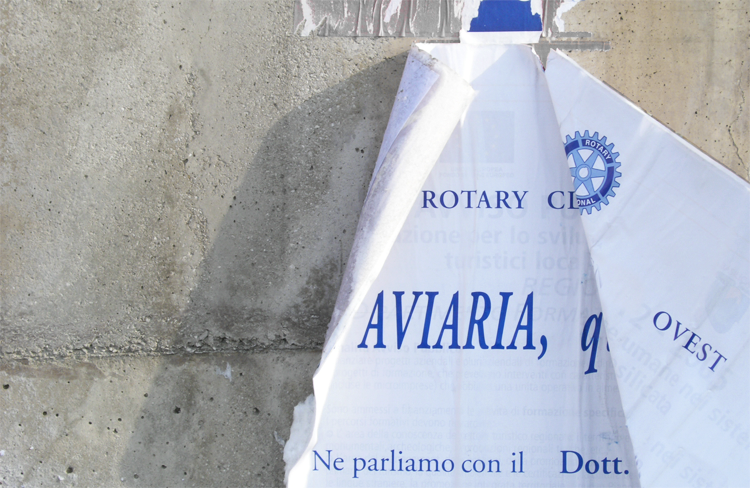
Immagine manifesta (Archivio Manunzio) in ogni accezione e del dotto dibattito che ne seguì officiato dalla locale sezione Rotary, paramassoneria direbbe il Venerabile Gioele Magldi, fratello anch’egli di quei. E di come la memoria, seppure volatile (e file) di carta azzeccata al muro sia ben oltre il semplice memento che non alberga e da tempo su Google delle mirabilia, eterodiretto più che mai dalle centrali massoniche a “responsabilità illimitata” dal libro di Chiarelettere del richiamato Venerabile
Tacca banda
(a breve ri-trovata pandemia, post fiasco Covid)
Tacca banda Orazio Carosello bianconero d’antan dove l’omino in tuba spelacchiata dava il colpo d'inizio alla grancassa a tracolla, e Orazio sordo-muto (!) con squittio e colpo di tamburello, il seguito della storia. Ora se la grancassa ha nome Klaus Schwab metti caso l’Orante-Orazio il faccione sorridente di Bill Gates ras della OMS sanitaria mondiale, allé la farsa può e deve continuare. Sì proprio lì dov’era temporaneamente terminata e ‘bbuono. Aviaria o dei polli quali non si sa, sempre made in China, erano giunti a noi il primo episdodo. I polli volano, dunque? None avevano preso l’aereo di classe tutt’altro che economica: Best Class. Quindi polli intelligenti, tipo Biden che cade dai gradini d’aereo, sì, ma nel salirvi e per tre volte come Pietro biblico, e tergiversiamo. Forse.
Sicché dopo il mezzo fiasco, o mezza fiale che dir si voglia non proprio riuscita inoculazione del Covid-tandem Conte 5Stelle & Speranza sinistro ministro della Sanità mortale (via massoneria Fabian inglese) eccoci all’altro tempo. Mammamia 100, dicasi cento, volte più mortalissima del Covid di laboratorio amerikano: Fort Detrick-ette. E quindi, qui ed ora, già pronto il vaccino volatile. E dov’è l'elisir di lunga vita? Ma nelle stanze di Bourla di BigPharma: sempre loro. Si, obiezione accolta, vabbene. Vero non se ne parla ancora del nuovo agente di spopolamento planetario, ma con un po’ di pazienza, via: lato traslato e come vi pare. Via a miliardi da questa Terra, basta aspettare il flop di Is – Ra - El (imparate a scriverlo così e trovatevi il perché e non l’imbeccata di Manunzio che si è rotto i…) e più ancora il crollo, triste solitario e finale dell’Ukraina. Il Tempo è Galantuomo, no? Sempre! Post quam On Air, ecco, il volatile che non vola come la papera che non galleggia ché l’acqua e poca e il popolo bue muggisce e basta.
Va da sé che c’è già in circolazione la zanzara geneticamente modificata, eh Bill Gates, vettore della terribile dunque** che tu guarda caso è “parcheggiata” in Brasile per prove tecniche, si capisce. Sì, quel Pese continente che, sempre il caso, fa parte dei Brics+ con fresco fresco quell’Iran bombardiere...e più non dico ma leggi Ezechiel che ei dipigne venir da fredda parte...Oh correte, mettetevi in fila a novanta-gradi, a prenotare il vaccino, o i vaccini a ripetizione: Uno nessuno e Centomila, evvaiii Armaggedon biologica-chimica-nucleare!
**La dengue è una malattia trasmessa da zanzare, causata da un flavivirus. La febbre dengue si manifesta generalmente con la comparsa improvvisa di febbre elevata, cefalea, mialgie, artralgie e linfadenopatie generalizzate, seguite da un'eruzione cutanea che compare con una febbre ricorrente dopo un periodo apiretico
Ps. Si vocifera pure il colera, anch’esso in rampa di lancio, che spopolerà e viene da ridere. Sì, siamo stati già “vaccinati” negli Anni Settanta (una fila da non dirsi a chi prima lo pigliava...l’antivirus e che avete capito) quando si sparse voce che a Napoli era scoppiato il vibrione colerico; prove tecniche di distrazione e depopolamento di massa. E d'altronde solo il già più che eccellente Malthus precursore dei fatti in narrato: Swalb ne sa qualcosa lei insieme ai suoi Davos Boy?
date » 15-04-2024 10:12
permalink » url
tags » storia fotografia, culo ingres man ray, fotografia analogica man ray, nati non foste, thumberwald, aste fotografiche, che culo,

Che culo
Si dirà il solito Manunzio. Ma no, ma no la fotografia mica si ispira alle spalle, eh. Un bel fondo schiena, vedete che Manunzio sa fare il “pulito” sebbene il circondario oltre a rigettarne la nettezza va in senso opposto. Opposto contro natura? Beh certo lato B con quel birichino (!?) buchetto. Certo poi l'artista, visti i tempi del Novecento passato per imbellettare il tutto ci mette pure due notazioni musicali. Fondo schiene, lato B, entrata retrostante: che culo sto Many Ray del “Dipingo quello che non posso fotografare, fotografo ciò che non riesco a dipingere”, giacché la sua nota immagine d'Ingres con-turbante (copricapo?) viene “battuta” e non dite che Manunzio...battuta per centotrentamila dollari con voce di Oliver Hardy. Più culo di così!
(Copia & Incolla se vi pare)
https://www.theguardian.com/artanddesign/2024/apr/11/man-ray-friend-to-sell-collection-200-works-ile-violon-dingres-print-auction-paris
date » 05-04-2024 12:29
permalink » url
tags » oliviero toscani ponte morandi genova, fotografia stradale, cartelli stradali, 33 rito scozzese, réclame terranova abbigliamento, allah akbar, sostituzione etnica, meticciato amorfo, colonizzazione italia manu militari, mondo delle regole capitaliste, thumberwald, quota periscopio,
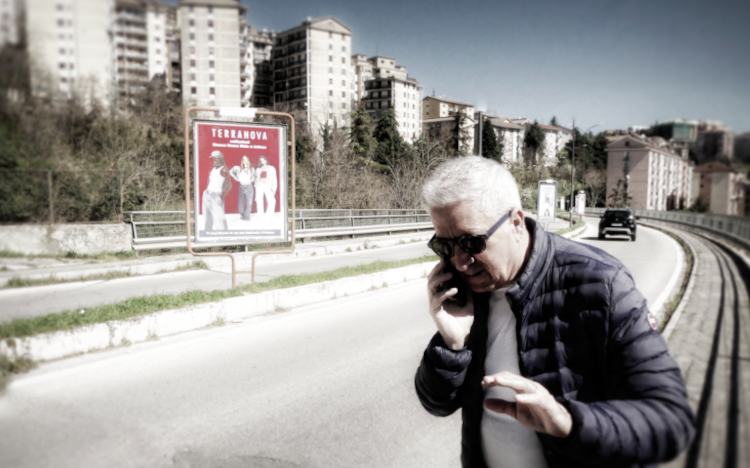
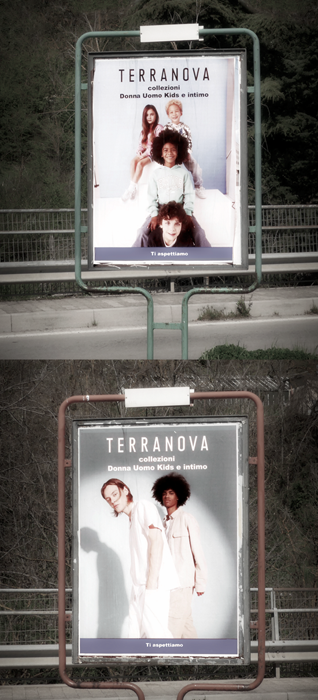 Quota periscopio, acque target e altro che proviamo a narrare in uno due tre...click. E dunque Terranova marketing che, inciso, è tutt’altro suono (energia) dal dire o scrivere Nuova Terra, oltre al fatto che l’appellativo geografico richiama in chi scrive si capisce le coste del Nord america e di Erick il Rosso ante Columbus natu est, e non la finiamo più.
Sia come sia pubblicità, va, vile messinscena sul solco di quello squallido ottantenne a nome Oliviero Toscani salvato per grazia ricevuta dal crollo del Morandi cui doveva transitare: certe appartenenze, pagano.
Terranova** e che sarà mai? Infatti qui sopra noi che scriviamo lo sconnesso ponte, di quarant’anni fa e da abbattere a più che modesto parere (c’è una denuncia di Manunzio corroborata da immagini e perizia tecnica e di altro ancora, regolarmente archiviata, si vede che il Tribunale appena sente Manunzio...) una fila di cartelli di réclame richiamano il prima e il dopo. Sicché se ritornate per un attimo su l’immagine di Toscani tutto fila più che liscio, perfetto per chi capisce. Depopopolamento e sostituzione etnica sbandierata per “nuovi orizzonti” di meticciato senza ieri né domani, non a caso il Cancel Culture. “Bimbi” del cartellone è eloquente: un africano giocondo a cavalluccio, su la schiena, colonna vertebrale di 33 vertebre di Rito Scozzese: che faccio continuo? Un bianco sperduto!
Sul fondo immagine, altri bambi cui una muta triste solitaria e finale, a sinistra mentre l’altra controcampo ilare e gioconda a destra, che per l’appunto se la ride. Altra immagine: visto niente? I suppose. Due men uno riccio gioiosamente ridens dritto e...turgido, va. L’altro? Bianco piegato che va a sinistra per l’uscita di scena: lato traslato e fate come vi pare.
Infine Last but not least la copertina, cover. Immagine a sinistra appena detta, cartellone con donne stavolta, bogomba nera a sx etc etc etc. Sì, il tale a destra, che conosciamo, colto proprio nell’attimo di passare sotto quota periscopio per non farsi notare e con la sinistra mano quasi a volersi scusare dell’impallato. Piegato anch’egli e pure ex Private Policeman. Tombola!
**Terranova (Fashion Brand del gruppo Teddy Spa) ha aumentato le vendite dell’88% grazie al lancio da parte dell’IACT VISIONI delle campagne Advantage + shopping di Meta
(Copia & Incolla se vi pare)
https://www.sanmarinoinnovation.com/comunicati-stampa/terranova-ha-aumentato-le-vendite-dell88-grazie-al-lancio-da-parte-delliact-visioni-delle-campagne-automatizzate-advantage-shopping-di-meta
Ps. Del richiamato link sovrastante vi si apre un quartetto, cui il negro si inchiappetta una morente e pur godente donna bianca con mano destra nel segno delle corna sataniche; immagine che pure richiama iconograficamente il Toscani-Benetton e che vede un angelo crasso abbracciare un negro con capelli cornifronte. Gli altri due commedianti a destra: il bianco con cicatrice sul cranio e la ragazza iper-capelluta tenerlo per la vita prima della stramazzante fine. Seguite sempre Sara Munari & Co e si raccomanda il di vostro cervello (!?) all'ammasso che...di diman' non v'è certezza. Firmato Nuovo Disordine Mondiale, via Kiev e Tel Aviv corrente, pur sempre quei dell'ultimo Covid!
date » 27-03-2024 12:10
permalink » url
tags » bibbia cristiana, concilio nicea 325, musulmani ebrei cristiani, vaticano spa settimana santa, caravaggio inventore luce, iconografia e bibbia, settimana santa mercoledì, fotografia, simboli e segni cristiani, caravaggio giuda iscariota, italia anni sessanta novecento, nati non foste, thumberwald, mercoledì santo, la notte del lupo, giuda vangelo apocrifo,
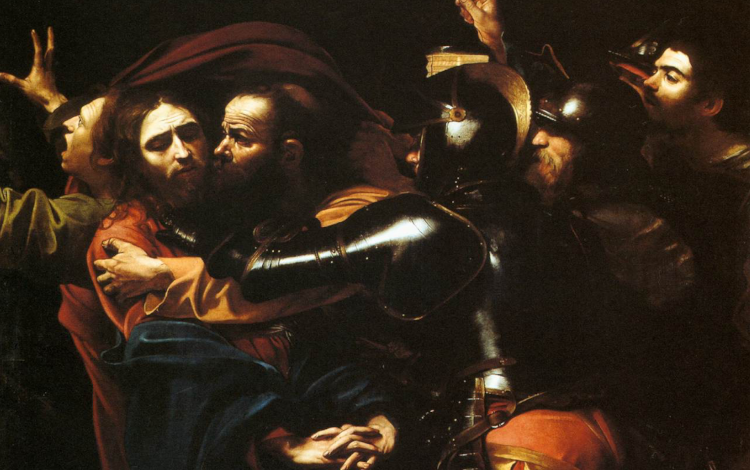
Caravaggio, sublime inventore e maestro della Luce, sebbene i fotografi e assimilati usino la traslitterazione soffusa e nordica di Rembrandt cui egli fa riferimento all’italico pittore, che si rifà e non altrimenti al biblico racconto del cosiddetto Giuda Iscariota e suo bacio traditore. Dipinto che non sarebbe potuto mai esistere senza il background cristiano tout court che dir si voglia di Caravaggio, a dimostrazione di come anche e forse soprattutto l’Arte iconica è figlia delle Scritture, sue vulgate, al pari, purtroppo, delle Teorie economiche che solidificano l’Occidente e santificano la Proprietà privata che, sempre nelle Scritture, è codificata nero su bianco. Pur se i Padri della Chiesa giustamente dicono del denaro quale sterco del Diavolo, forse troppo tardi prima della brace atomica imminente
Mercoledì Santo
Ora si è già scritto ma è oggi cade il fatto di Giuda, famoso o famigerato dipende da come si guarda il mondo. Scritture canoniche un po’ ballerine circa l’Iscariota, il patronimico del traditore per antonomasia. Senonché a leggere il suo Vangelo, pare che ognuno dei presenti e non solo a quei fatti ivi compresa Maria Mater Dei ne ha lasciato traccia scritta diretta o indiretta che sia, e che la dice lunga su quel lontano duemila e rotti anni fa. Non è il caso di proseguire. Detto questo le Scritture per chi le conosce altro non sono che il Summa dell’Occidente morente e sia lodato Iddio. Libro? Certo così la Torah dei “fratelli maggiori” ipse dixit Giovanni Paolo secondo, che secondo Manunzio è troppo se non blasfemo chiamare “santo” dopo aver contribuito all’abbattimento dell’ex Urss , ciò che ne è derivato sino ad Elstin. Fermiamoci.
Scritture coraniche per gli ismaeliti (Gesù vi compare come Profeta nel Corano) detti così un tempo. E Bibbia per noi altri: tutti. E non è un fatto da poco, tutt’altro cui senza non sarebbe possibile parlare anche di fottografia, raddoppio lo si è già scritto altre volte. E siamo pure parenti. Dite? L’ignoranza è na bella cosa li fuori e basta non esageriate e seguite mocca mocca (prendere dalla bocca) sempre Munari & C. e suoi tristi figuri discendenti che Mayphotoprtal porta sul palmo della mano! Manunzio che pure è comparso nella lista dei “bravi” per l’appunto è un “bravo” manzoniano…
Parenti si è detto. E direte: come? Abramo è il ramo da cui e a cui ci si riferisce la triade poco sopra richiamata.
Sia come sia tutta l’iconografia, sebbene la stesse scritture ne proibissero e i musulmani non hanno e tutta la storia dell’Arte lì è tronca tranne arabeschi da indurre vertigine. Sicché tutto ma proprio tutto ci si “abbevera” alle (nostre) Scritture, e ieri Martedì Santo se ne ricordava di come il Nazareno si scagliasse (senza se e senza) contro la Proprietà privata, Satana in persona cui siamo acerrimi nemici; fatt' da Crist’ che al Tempio ricordato s’era incazzat’ ner’, cum a Crist’ manco a dire!
Significa tutto questo? Siamo uomini e pure donne del Libro, purtroppo. E allora Silenzio (...se ci fosse un po' di silenzio, se tutti facessero un po' di silenzio, forse qualcosa potremmo capire. Voce della Luna, Federico Fellini) come una volta Rai non catodica bensì radiofonica Anni Sessanta (la televisione come medium piglia tutto di là da venire) mandava in onda di questi giorni solo e soltanto musica classica. Molto meglio delle atee baggianate buddiste: ohmmm...Amen
Ps. Giuda aveva la cassa del gruppo di Hyppi (discepoli) figli dei fiori ante-litteram, quindi figurarsi come era tenuto in conto il “traditore”. E al riguardo c’è un bel libro (La notte del Lupo il titolo) che vede i due, Gesù e il tagliagole detto da questi salire, al monte in una notte di fatti.
C’è anche l’esoterico Vangelo Secondo Giuda, gnostico e apocrifo, da leggere ché non sono chiacchiere bensì riscontri paleografici, archeologici in senso lato, etc.
Ah en passant apocrifo tutt'altro che falso, ma a Vaticano Spa non gli piace e per questo non canonico in Bibbia, come tant'altre cose: la storia la scrive chi vince e nel caso dal Concilio di Nicea 325 dopo Cristo a tutt’oggi, e si vede!
(Copia & Incolla se vi pare)
https://it.wikipedia.org/wiki/Ismaelita
date » 26-03-2024 10:06
permalink » url
tags » fotografia di strada, street photography, fotografia analogica, stampante hp 9180, era digitale fotografia, image, thumberwald, eugene atget fotografo parigi, stampante hp 9180, munari fotografa, myphotoportal sito fotografia, nulla elevato a nulla, point and shoot olympus,
Immagine di street non foss’altro che i manichini in vetrina sta(va) su la Main street e quindi...non di meno fotogrammi che non trovate (manco se si stacca' Criste da la croc') negli scatti degli amanti della strada a tutte le ore. E c’è da capirli ché infame Quinte colonne Munari & C. troppo presi a fornire coordinate a Pentagono-Cia-Mossad su volti e raggruppamenti non più vietati così come durante il Covid del Tandem Speranza-Conte via BigPharma. Pare una boutade alla Manunzio eppure garantiamo che per le ore e i giorni passati su Web così non è, ma poco importa. E d’altronde era un giornalista Gianni Lanes** a rivelare che i dati sanitari viaggiano oltre Oceano, al Pentagono.
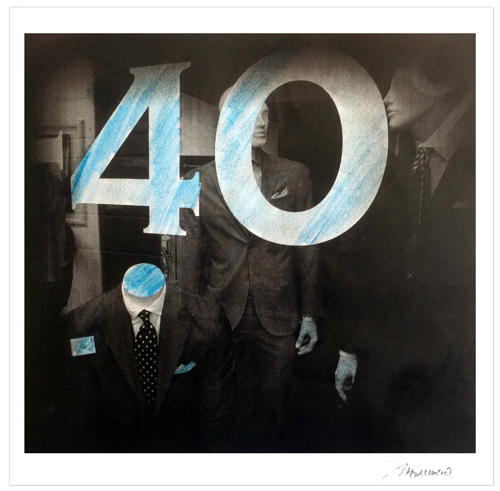 Sia come sia si ritorna all’essenza, lo scatto. E non siamo un Atget, solo d’uno che con la macchina, qui una Point&Shoot Olympus, guarda osserva calibra e nel caso scatta. Vetrine a dirla tutta di quando la Main Street a nome Via Pretoria su l’impianto romano non a caso, finisse completamente distrutto alla Soros maniera via Davos Boy gli stessi del clan Chicago o Disordine Mondiale.
Immagine in poche battute passata alla gloriosa Hp 9180 su carata da fotocopia riesumata dall'archivio di carta, ecco, Manunzio e spruzzata di vernice per inglobare il “carbone” degli ink, immagine stesa su cartoncino per migliore manovrabilità. Click on to enlarge image
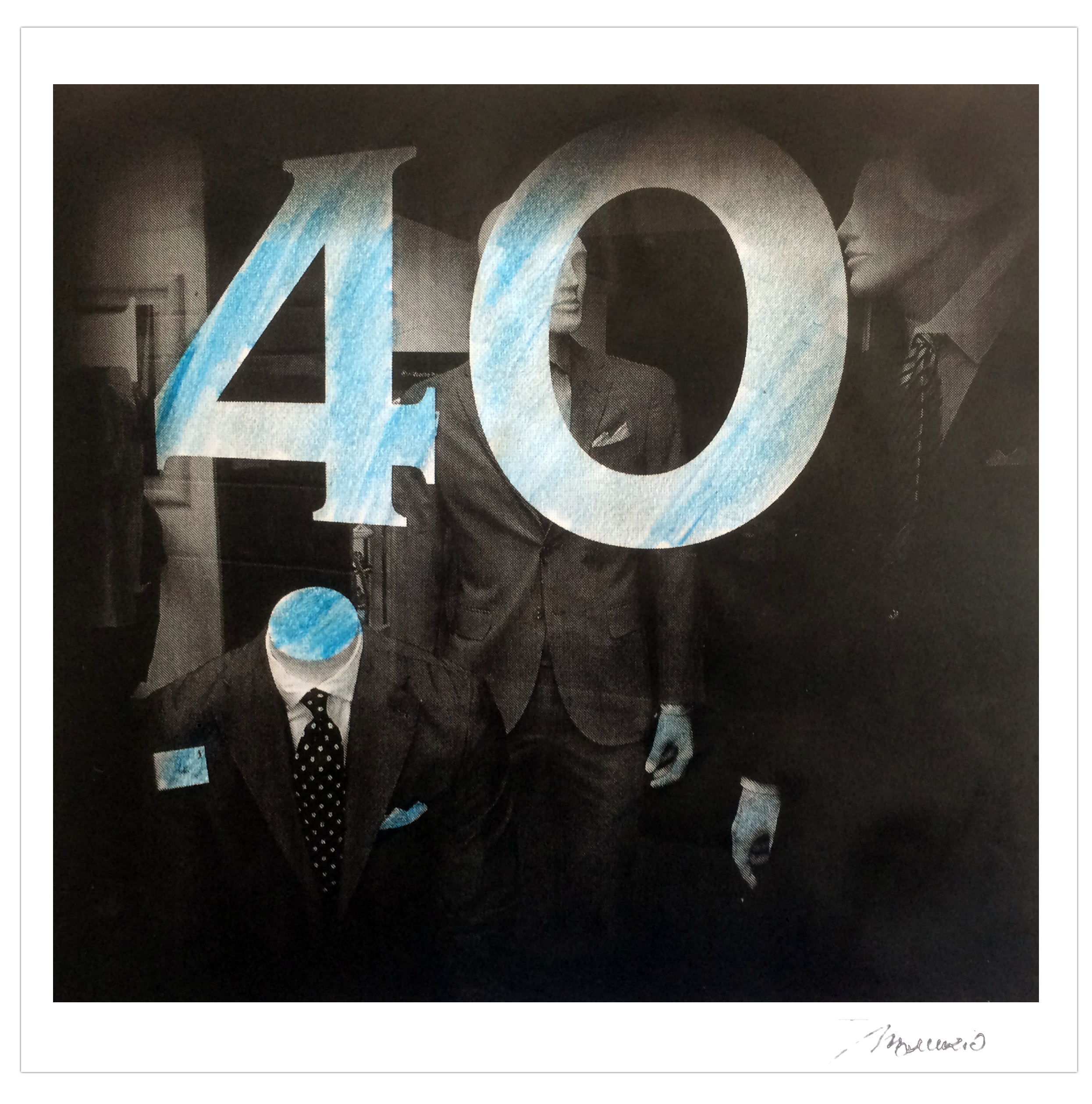
Sì, bianconero e colorata a mano per togliere dal mondo “reale” e trasferirla come Manunzio sa fare in quello “immaginario” o da questo a quella fate come vi pare. Manipolazione, incrocio fra analogiche matite, pastelli, gessetti e ink digitale. Un manufatto che mai e poi mai potrà restituire una qualsiasi AI. Infatti il taste/tastà (tastare, toccare in dialetto indigeno) è la trasmissione di energie intrappolate dal supporto non meno dall’occhio. Siamo in buona misura ancora analogici tout court.
Per i cultori del Nulla (lasciate che i morti seppelliscano i morti) si continui a vedere fotocopie di fotocopie che Mayphotoportal mena in primo piano (!) e certi funghetti nati di notte tempestosa, fotografi pensa te (al peggio non c’è mai fine) usciti, guarda caso, da quella brava fotocopista della Munari & Co. E si vede. Il Nulla elevato al Nulla. De gustibus certo, non a caso si parla al corrente e di generazione Z che è l’ultima lettera dell’Alfabeto italiano. Ultima. Una prece
** Complottardo, No Vax, Diertrologista un tempo, Terrapiattista, Scemo di guerra, Giapponese nella Jungla, Sessantottino impenitenti d’antan fate come vi pare ma qui il lik lo mettiamo qui augurandosi che Google-Cia-Mossad non l’han a togliere bper “oblio”
http://oppt1776.blogspot.com/p/tessera-sanitaria.html
Atget
https://it.wikipedia.org/wiki/Eugène_Atget
Ps. Scemo di guerra quanto volete ma qui il Pdf...a buon intenditor
date » 23-03-2024 11:01
permalink » url
tags » fotografia strada, street photography, bianco e nero fotografia, fotografia digitale leica bianco e nero, thumberwald, no word,
NO WORD
https://www.youtube-nocookie.com/embed/oUtPUuJ4yRs
https://www.youtube-nocookie.com/embed/EI6mMKF8J4c
date » 14-03-2024 11:14
permalink » url
tags » covid whuan, fort derick virus manipolazione, bill gates virus, bigpharma virus covid, oms virus, carta hahnemühle, fissativi hahnemühle, baritata canson, baryta ilford, baritata adox inkjet, stampa inkjet, carta rosaspina fabriano, carta amatruda amalfi, taralli portoghesi, thumberwald, virologi televisivi, bill gates oms, miao miao bottino gatto manunzio,
L'anno della...vittoria
Avevamo sistemato il carrello a vetri, dietro una delle porte ad evitare “question’” con la coniuge, che, anzi, si era detta a modo suo darmi una mano, un piede...E ne è venuto fuori il solito ordine, sì, ma a capa di ‘mbrella. Senonché l’ordine stamani è stato invertito non foss’altro che poco funzionale, e allora “chella ca sta a vasc’ sagl’ ‘ncoppa” e viceversa. Si le scatole dell'archivio stampe digitale, sotto nun va ‘bbuon’. Questione che Manunzio oltre a sistemare nuovi fogli di carta più che pregiata (vien fuori dall’ottima Pixma Pro 200 che spara “acqua colorata” dicono certi prufessur’ e poco durano, e siccome Manunzio non ha voglia né di mandarli a f...men che mai argomentare della loro fessaggine, che dire?) le stesse fan come caleidoscopio di rimandi.
Da una scatola, via, un bigliettino scritto durante La Peste formato Covid-19, sublime invenzione Bill Gates-Oms-BighPharma-Fauci-Speranza ministro Sanità-Conte in camicia nera tipico del Regime Ventennale. Sistema che, manco a dire, ha fatto da Lab universale, fregando Cinesi (inventori del pipistrello-virus-mercato pesce Wuhan) e Fort Detrick l’americano con buona pace di Mentina Open. Tanto per capire il quadretto di sterminio planetario di quel primo comandamento della Georgia Granite Guide Stone: prima fatto saltare in aria, successivamente demolito. Oh che peccato ché erano le Nuove Tavole dei Comandamenti, sì satanici. E il primo, appunto, diceva “Mantiene l’equilibrio con la Natura a non più di cinquecento milioni di esseri” e aggiungiamo “cui una piccolissima parte i governati draconiani o lucertoloni stile Visitors televisivo Anni 80 scorsi” il resto? Mancia, si usava dire, schiavi o Goym o Gentili fate vobis, tipo a Gaza l’ottimo cecchino ebreo sparare al disarmato ragazzo adolescente palestinese, lodato dal pari ebreo ministro, che propone onorificenza manu militari.
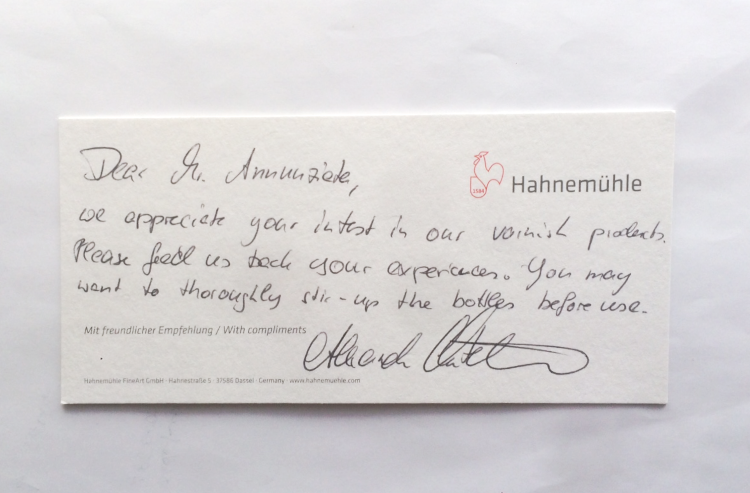
Scatole, quindi e concludiamo, con un bigliettino ritrovato via Hahnemühle, molto cortese nello spedirmi due bottiglie di fissativo per canvas inkjet, ma che ostinatamente si è usato per le normali stampe: un macello neanche vaporizzato, insufflato...sempre macello è da buttare via alcune stampe. E meno male che lo spray c’è! A volte percorrere strade nuove non è detto che i frutti (risultati?) buoni tali siano.
Nb. Nel novero mancano gli “accademici “ alla Burioni (cos’è una burla?) tronista a Che tempo che fa, Capua (zanzarologa), Viola e Crisanti il vampiro alla Crozza, Galli colpito da se stesso, Bassetti Preglisco e Ranieri Guerra, uscito di scena e non più a radar della Oms in appalto Bill & Melinda Gates, che nel frattempo ha divorziato dal sodale compare
Ps. A latere ma non troppo, le scatole, più d’una a dir vero, restituiscono immagini su diverse carte dall’Amatruda, cartiera d’Amalfi l’antica repubblica marinara, che è un piacere tattile più di quello, ecco, di donna (?!). E Rosaspina Fabriano non meno (stavo per scrivere arrapante, pensa un po’ te) di quella. Anzi su quest’ultima si è stampato un cielo virato di caldo (più o meno Magenta) sovrastante dei silos industriali, qui a poche centinaia di metri dal Manunzio. Ebbene quel velo tipico, contrasto insito della carta non trattata con bario etc, più vado avanti, più guardo, è squisitamente funzionale alla narrazione della personale visone d'immagine.
Pss. Revisione lunghetta causa MiaoMiao (si chiama Bottino) che è venuto a passeggiare su la tastiera: dite? No MiaoMiao è l’unico a fare ciò che gli pare. E vedete la pazienza di Manunzio? Più di Giobbe biblico, più…
