
date » 10-05-2024 11:29
permalink » url
tags » myphotoportal condominio cito, fotografia analogica, pellicola invertibile kodak per 64, slide film kodak 64, tempo rivista fotografia, allunaggio televisivo, storie di carte, fotografo francesco cito guerra afghanistan,

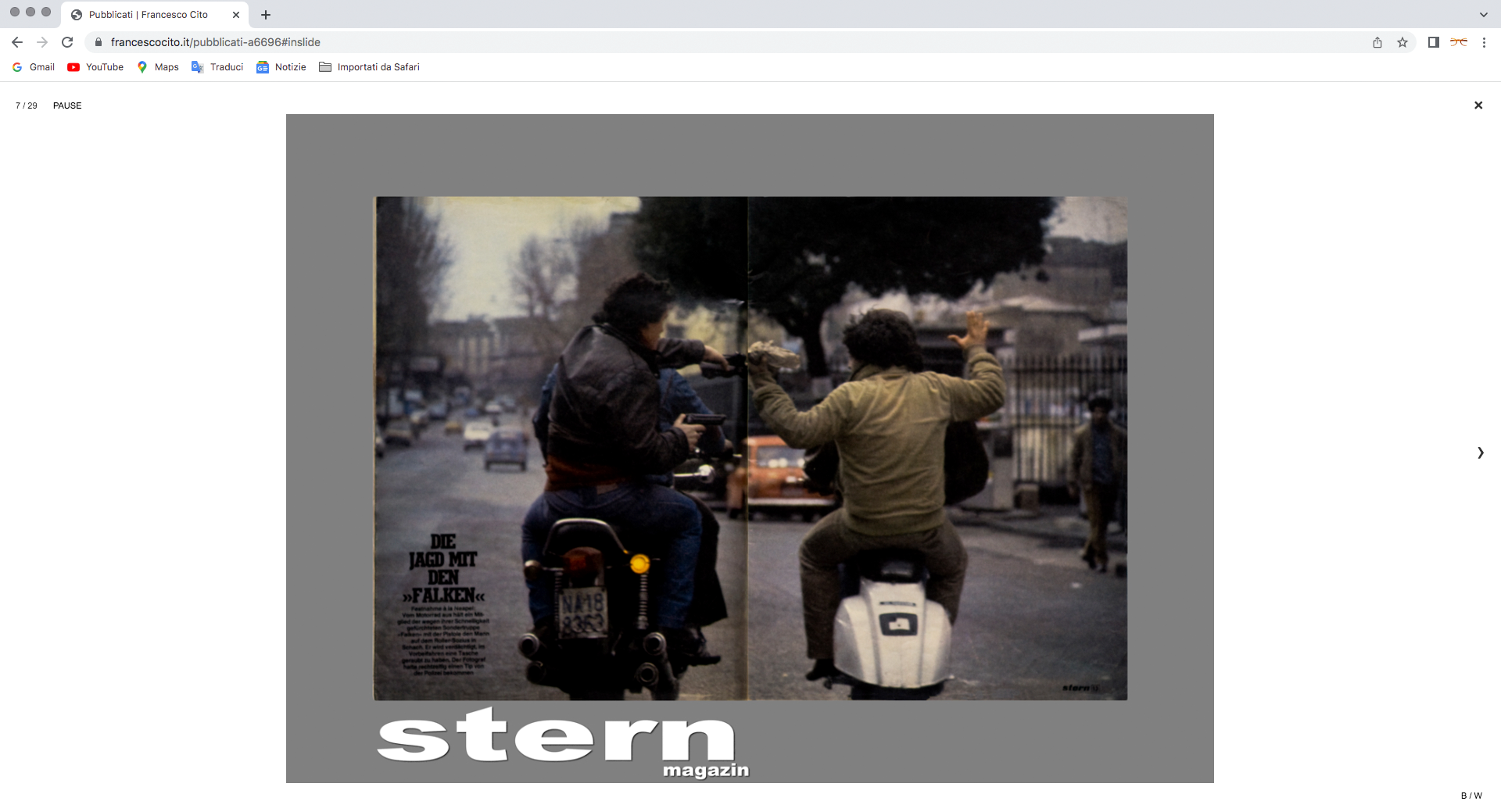
L’immagine a sinistra è una pagina di cm 24 x 33,5 base e verosimilmente scattata dal fotoreporter Francesco Cito su Ektachrome Pro (fisime e chi scrive ne ha avute proprio così) o men che sia Iso/Asa 64. E oggi la si direbbe poco definita, sgranata senza meno. Eppure non guasta affatto.
Immagine di una pattuglia motorizzata di Sbirri napoletani che affianca una vespa cinquanta di pover’ maraonn’ di guaglione corrieri della droga: pesciolini che si posso mettere, per l’appunto, in prima pagina. Tempo di nome e di fatto, rivista che durò lo spazio di un mattino, sebbene il colophon/timone porti la prestigiosa firma al Coordinamento immagine di Uliano Lucas, per gli imbecilli italiani, caciaroni analfabeti di andata e molto ritorno grazie alla tonaca nera (!) di Vaticano Spa e quella melassa (intellettuali del menga) prezzolata, con ancora in tasca la tessera dei “tengo famiglia” a nome Pci (terminerà sua esistenza di Partito Comunista italiano rosso-luciferina cinque anni dopo l’immagine di Cito,con il crollo del muro di Berlino, Anno Domini 1989) già sguazzante liquame del Kapitale da impallidire le etere greche, a pagamento ben s'intende
Era ora che un po’ di serietà fotografica re-apparisse sul condominio Myphotoportal che troppo spesso rimanda, ecco, voci, di queruli ed inutili fottografi: sì, raddoppio come gramigna, o nel caso di specie, edera che dove cresce s’attacca (!) o di chi manco sa declinare, in italiano, le proprie generalità figurasi a tenere in mano un apparato per l'appunto fottografico. E vive il tapino fesso e cuntent’ supportato pure à la page da Myphotoportal. Allora il Cito fotografo d’antan, che almeno sa quel che fa: vi pare poco? Ma per niente a fronte dei richiamati con doppia “f” che non sta per traslato F, bensì proprio: fessi alla napoletana. E pure alla pugliese, abruzzese, lucana: fessi e basta!
Senza farla lunga, Cito dalla sua Home ha discreta pretesa di dire qualcosa se ci si sofferma un attimo e senza “zappare” come ci insegna, ecco, Mammasantissima televisione o lo “scrollo” infinito dei tablefonini: sempre sia lodato Steve Jobs. Amen.
Tuttavia a scanso di equivoci di Cito non ci piace granché per il fatto d'essere fotografo embedded e che non avrebbe mai potuto far carriera onori prebende e quant’altro senza inchino (novanta gradi?) alle Centrali del Pensiero Unico: anglo-american-sioniste. E ognuno s'è detto tiene famiglia
Ps1 Tempo, mensile edito da “Tempo Illustrato” fu l’inutile accanimento terapeutico per rianimare un’idea fotografica tutt’altro che peregrina, visti i precedenti di Panunzio & Co. dopo guerra. Non ancora visibile sui radar la “rivoluzione” dal latino malandrino re-volvere, di Internet e compagnia bella, tuttavia il Grande Moloch Fratello (che grado rito scozzese?) Televisione con sue “dirette” vedesi l’allucinazione mondiale del cosiddetto “allunaggio” se ne riparla quando esce a breve il “remake” ancora in mondo visone cinematografico però, mise pietra tombale su la cosiddetta “carta” stampata si capisce
Ps2 Cito di tre-cotte, il fotografo, si fece il suo tour, nascondendo bene bene le sue fotocamere sotto i baffi e barba posticcia, turbante afgano bastone del viandante e quant’altro. Suo fotografare era mettere alla berlina il compagno Ivan, quando c’era ancora l’Urss dei compagni russi, ecco. Sì, sputtanare l’Armata Rossa che invadeva il povero (!?) Afghanistan di papaveri oppiacei e avvertiva Israele della prossima aria: quel che adesso è il Genocidio di Gaza e non solo. Tuttavia, morto un papa se ne fa un altro quando arrivò con squilli apocalittici il 7th Cavalry Regiment (lo stesso di Ombre rosse-Stagecoach). I soliti esportatori e benevoli e buoni, di democrazia. Stesso suolo stessa fine in quel Afghanistan con i cargo americani che decollano (Saigon, Vietnam 29 Aprile 1975, dixit) con afgani attaccati alle ali! Talebani già eterodiretti Cia-Mossad e prima combattuti a chiacchiere, ipso facto promossi alla guida del martoriato paese (alla faccia degli uteri marci di verminaio che blateravano contro il Burqa che le donne lì fregava di meno) non prima che sottobanco prebende agli anglo-americani-sionisti in formato polvere-papavero
Ps3
Quando comparvero le immagini su Stern, i nazisti germanici le provarono a suonare ai camerati fascisti orfani di Mussolini: spaghetti people vs mangiatori di krauten. Gazzarra studiata da ambo le parti a tavolino e brindisi con champagne, di quello italiano però
Reportage Cito, Napoli[/center][/font2]
date » 29-03-2024 11:15
permalink » url
tags » immagine riti pasquali, manunzio archivio misteri pasquale, scritture crocifissione storia arte, vincenzo verolino street photographer napoletano, atella vulture riti settimana santa, golgota sacre scritture, aglianico vulture, venerdì santo, vangelo giovanni tunica crocefissione,
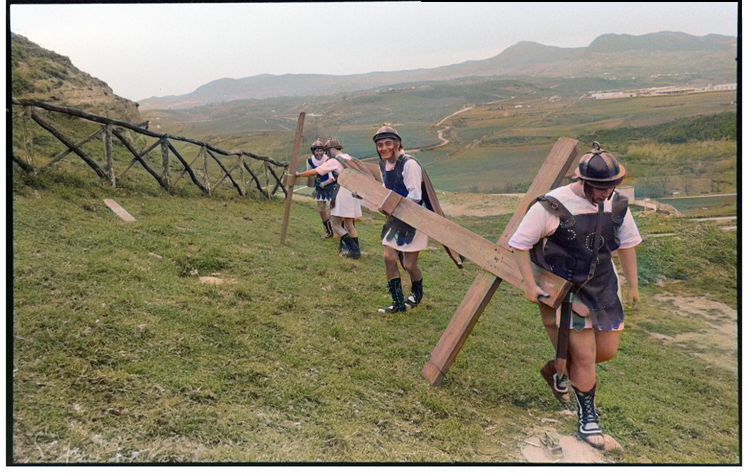
A distanza di decenni dallo scatto, l’atto conclusivo del Golgota sotto la Croce del Nazareno secondo le Scritture, nell’ora in cui i soldati romani cazzeggiano, tranne il primo a dx che a testa bassa sembra echeggi il biblico...era veramente figlio di Dio…dell’avvenimento tragico appena concluso, ritrovo, a dirla tutta, una sorta di sovrappensiero che muove al fotogramma. Un automatismo apparente, quanto si vuole ma che, se non fossi stato "indottrinato" di Catechismo, mai così il pathos sottotraccia dell'inquadratura.
I soldati poi, quando ebbero crocifisso Gesù, presero le sue vesti e ne fecero quattro parti, una per ciascun soldato, e la tunica. Ora quella tunica era senza cuciture, tessuta tutta d’un pezzo da cima a fondo. Perciò dissero tra loro: Non stracciamola, ma tiriamo a sorte a chi tocca.
Così si adempiva la Scrittura: Si son divise tra loro le mie vesti e sulla mia tunica han gettato la sorte. Vangelo Secondo Giovanni 19, 23-24
Venerdì Santo, Crucifige
E’ il clou della Settimana Santa, quando all’ora nona e siamo intorno le tre pomeridiane il supplizio volge al termine: questa è storia vulgata, fra Pilato dalle mani candide di sapone sopraffino e gli intabarrati Caifa & Co. del Sinedrio ebraico; lesti di mano i romani quanto al resto "Graecia capta ferum victōrem cepit". Dite? Sì, proprio spizzicati, e barbari ça va sans dire, gli odierni Yankee. Quanto ai secondi, soliti scribi farisei e Benjamin Netanyahu Gaza docet su tutte le televisioni terrestri. E fermiamoci.
Questa volta la cover non è dotta citazione, Crocefissione, pittorica della Storia dell'Arte, quanto uno scatto fotografico, giacché qui si parla pur sempre di fotografia tout court. Certo anche bisognerebbe domandare se lo scatto rientri a pieno titolo nel canone street o reportage: vexata quaestio Eccellentissimo Cattedratico nonché Luminare Prof. Vincenzo Verolino, che impazza sul web con sua ideologia di strada, questa a conti fatti la sua street photography o e stritt' sritt' vicoli di Napoli dove egli signoreggia da Viceré.
Lo scenario, infine, è Atella in Vulture che non è un "cornacchione" quanto prende nome dal Vulcano spento dei monti circostanti. Atella già ieri ha aperto la tre giorni dei Misteri. Molto suggestivo l’ambientazione, l’immagine conclusiva del Golgota, ambientato sotto le mura cimiteriali del piccolo borgo!
Ps. Vero la Sacra Rappresentazione per antonomasia, sebbene molto inflazionata e scompaiata da tempo, è sicuramente Barile a un tiro di schioppo da l’atellano luogo, vi si arriva ancora con una stradina interna, pur se vi è un tragitto rotabile più moderno e fruibile. Nome men, quindi, per l’ottimo vino Aglianico del luogo (non è uno spot bensì ottima costatatio) e terre lucane convicine. Borgo che mette in scena, oggi Venerdì, per vie e vicoli i cosiddetti Misteri. La prima volta che andammo ero molto piccolo sul finire degli Anni Cinquanta, con la nonna battagliera napoletana. Era un giorno velato, e su la vaporiera, sì, quelle che si vedono nei film di Agatha Crist’, le porte (ogni passo una!) dei vagoni non più scritto Terza Classe di Fascista memoria quanto una più democratica (Cristiana) Seconda classe: panche toste e dure da far male le chiappe a starci seduti, ma tutto il tempo stemmo al finestrino che ci apparve, e lo era, un avventura
Pss. L’immagine non è toccata in alcun modo se non colorata artificialmente, eppure molto intrigante del bianconero di partenza su HP5 Ilford e Contax 24mm Yashica (se già detto, ma repetita juvant della pari bajonetta Yashica-Contax). Cielo magnificamente nuvolo ma non troppo: sospeso che manco i migliori registi di film riuscirebbero. E se vi capita una giornata così, con tanto di casse acustiche che irradiano musica classica, oh, fa effetto a noi che non siamo né saremo ferraglia robotica “eterna”
date » 14-03-2024 20:35
permalink » url
tags » tamapan tax, cooperativa indice referendum, pippo civati tampon tax, tampon tax, ingroia ruotolo rivoluzione civile, immagine donna, nati non foste, taralli turchi, landini cgil, onda rossa lgbt+, popolo viola telecomando, guerra gaza, emma bonino radicale, dea madre pagamento serale, stampa & regime tampon tax, compagni e compagne,

Tampon Tax
(Immagine Donna)
Compagni dai campiii e dalle officineee è un ingiustizia! E se a parlarne sono, appunto, i compagni di partito (per dove?) c’è da ascoltarli, volendo e se non sia niente da far meglio. Comunque sia l'ingiustizia c’è ed è inutile negarlo. Vabbene ma di cosa? Il pannolino della Dea Madre...ahh ecco. Troppo costoso via, ecco, serve a questo, via, appunto calembour o men che sia. Ora è gravoso per la Dea Madre sborsare una tampon-tax, sempreché esista ancora il ciclo. E già se andate per siti della richiamata Dea, v’accorgente, ohibò, che alcune ancelle di quella lamentano la scomparsa in età molto ma molto giovanile del ciclo catameniale (uso scientifico, no?). Disperate? Eh pare proprio di sì, poverine ché pensavano solo alla sterilità del “maschio represso masturbati nel cesso” d’antan : vero Bonino & Sodali? E mo’ che il fatto tocca esse (ci frega poco la grammatica) strillano: chi va p’ sti mari sti pesci piglia, sì, ma non producono più frutto (gravidanza come certi spot con controllo test ad hoc) certo a volerlo si capisce.
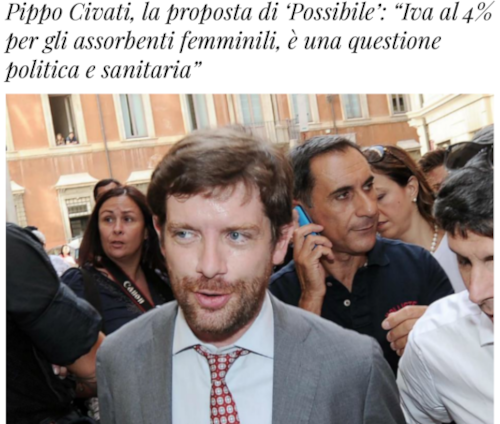 Le vedessi esse (sempre frega meno la grammatica tanto bestie sono e il pronome* ci sta giusto) in vesti colorate arcobaleno LGBT+ o vestite di (jattura) Viola contro la guerra, qui ed ora, in Palestina? Macché a telecomando le si ricorda contro Berlusconi “Se non ora quando” manifestazioni cui immagini abbiamo ad archivio, reportage qui da questa landa, come a telecomando per il Belpaese (territorio mica formaggio, forse) portarono in piazza dissero Stampa & Regime catodizzata pure un fiume donnesco : meglio sarebbe stato e tutt’ora a cert’ora del giorno: su e giù. Lato traslato e fate come vi pare, calembour o men che sia, forse.
Immagine, dunque, al fin della tenzone. Sangue a dir vero: rosso quando il giorno prima una pipetta di spot lo marcava, il pannolino, di blu o meglio “celestiale”. Senza ricordare il sangue gocciolante (!) della cicciona americana passata per le Televisioni in spot. Naturalmente con le ali, sempre i pannolini, ma senza carrello, infatti, dopo breve volo liberatorio le donzelle si fracassavano al suolo. Altre per strada (vedente voi, Manunzio, eh?) con sorriso ché basta un pannolino et voilà rien ne va plus. Dea Madre, sangue, zolfo, seduzione (era d’uso un tempo non lontano, se ne trova traccia in Letteratura del 900, che il sangue catameniale messo in bevande tout court dalle donne era “filtro d’amore” di attaccamento al beneamato. Incanto, sviamento odierno di massa: Potere della Dea Madre, si capisce
*Esso, essa, pronomi di terza persona singolare per animali e cose, seppur presenti nelle regole grammaticali, sono orami superati nell'uso. Diciamo pure lui, lei. E così nel plurale, anziché essi, esse, l'uso ci dà licenza di dire loro.
Franza Spagana purché se magna. Cesare portace arto vino che noi lo bevemo...e poi gli arisponnemoooo...ma che ce frega ma che ce ‘mporta se l’oste ci ha messo l’acquaaaae noi je dimo, e noi je famo, ci hai messo l'aqua e nun te pagamo, ma però: noi semo quelli che j'arrisponnemo 'n coro, è mejo er vino de li Castelli, e de 'sta zozza societaaa.
(Non mettiamo conto se sparisce il sottostante link, tanto tutti “spariamo” per tanto conviene leggere l'allegato Pdf)
https://www.ilfattoquotidiano.it/2016/01/13/pippo-civati-la-proposta-di-possibile-iva-al-4-per-gli-assorbenti-femminili-e-una-questione-politica-e-sanitaria/2371255/
Link Fatto Quotidiano/Civati
Ps1 In allegato il Pdf che si è preso dal Fatto Quotidiano, avessi visto che per legge dell’oblio “internettico” sparisce e buona notte ai suonatori: immaginate lo storico (!?) futuro in cerca di pompinosamente dette “fonti storiche” che se non scritte ma solo virtuali, sta mazza. Avanti alla cassa
Ps2 Possibile, movimento, di Civati, la “colazione” sociale del ex Fiom tirato su a braciole e Sangiovese odierno Ras della CGIL Landini; i Ruotolo giornalisti con giudice Ingronia, prima con Mossa del Cavallo, poi Lista del Popolo per la Costituzione, infine, Rivoluzione Civile da ossimoro perfetto, tutti disturbatori prezzolati, qui ed ora. A risalire indietro troppo lungo e a nessuno frega niente (che ci guadagno, cash, direbbe un minchiapixellisti fatto nelle vene?) i vari grupparielli di compagni e compagnucci della parocchietta famigerati catto-comunisti o una Chiesa al quadrato: compagni duri e puri, eh, Manunzio che c’era!
Ps3 E vi par poco che la “rossa” (contrapposta ai bianchi dell’allora DC) Coop romagnola nata proponga referendum sulla tampon-tax? Metti che vince: allè alla cassa che gli assorbenti, per igiene, si cambiano lesto lesto. E pecunia (catameniale) non olet!
date » 27-02-2024 10:39
permalink » url
tags » reportage di guerra, adrenocromo luciferino, stella david, streaming guerra, fatti non pugnette, terzo millennio fotografie, banane anatomiche, stampa & regime guerre seriale, gaza genocidio israele, babilonia satanica, armir russia, csir corpo italiano russia, crosetto ministro guerra italiano, meloni camerata zelensky, myphotoportal piattaforma fotografia,

Condominio Myphotoportal
(riceviamo a mal volentieri diamo conto per quanto ci riguarda)
Uno strano condominio a dir vero dove a volte, con tutto il rispetto del politically (in)correct, si fa fatica ad accettare i “condomini”. Ma la civiltà (?!) oblige mettiamola così.
Colpisce in questo XXI secolo e chi crede di fare “reportage” sebbene lo streaming ci mette H 24/24 in contatto con zone pruriginose, feuilleton che una volta si trovavano da barbieri, alias Cronaca Vera, come l’acqua o certi programmi Vero-Verissimo-Verissimo assai, e verso l’infinito e oltre. Non ci siamo.
Ora ancor prima di essere fotografo come “lettore” di immagini e notizie insieme a tanti che “hanno andato a squola” ci si attende che i fatti/immagini siano quanto meno all’altezza della “squola”. Manco per il c...ervello, anzi, sotto la croce di Crist’ e più giù verso quale girone dantesco non si sa. Non ci siamo.
Ovvio chi intende ha tutto l’interesse di ammorbare l’aere già maligno di suo, purtroppo. E il fatto affonda radici in quel di Babilonia troppo lungo a dirsi e i grembiulini tout court s’incazzerebbero a morte: Gaza docet.
E finiamola con poche battute: possibile che un fotografo senza arte né parte (immagini parlano in sua vece, no?) clicchete clicchete spara baggianate d’immagini, nientemeno? Haiti, ad esempio, è molto altro che le barzellette fotografiche messe in posa e poi: cos’è un freeze-frame di video spacciato per immagini fisse-fesse? Se sì allora meglio il video. Non ci siamo.
Ukraine, altre immagini "fisse" del fotografo in oggetto, è l’estremo tentativo dell’Occidente laido giudaico cristiano di continuare con l'Adrenocromo per chi capisce. E stanno fuori di testa questi pagliacci formato Macron nientemeno che immedesimatosi nel Petit Caporal Napoleone Bonaparte, sì, ‘taliano. Vabbene ma la Beresina sta lì nei libri di storia: scornati francesi. E Olaf Scholz il Social-fascista non da meno post Adolfo Hitler, anche qui: Stalingrado sta nei libri di storia. E Benito incarnato in quel “carnovale” del Ministro della Guerra Crosetto? Sì, dimentico costui & sodali a telecomando del ARMIR 1940 non prima del CSIR: il secondo o Corpo di Spedizione Russia precedette drammaticamente la successiva Armata Italiana in Russia cui tragiche vicende stanno, nero su bianco, su libri di storia e “Centomila gavette di ghiaccio” o “Il sergente nella neve” di Rigoni Stern, oltre a tutta una serie diaristica* di fatti rinvenibile nel Centro diaristico nazionale fondato da Saverio Tutino.
E tutto questo manco l’ombra nell’immagine di questo detto fotografo di “fatti”. Ora una volta nella Prima Repubblica c’era la cosiddetta “Sinistra indipendente” furbacchioni della Democrazia Cristiana ma che venivano eletti (!) nelle liste del PCI ma da questi “indipendenti”. Colombe, agnellini, finanche utili idioti venivano detti...consigli per gli acquisti!
*https://biblioteche.cultura.gov.it/it/istituti-culturali/visualizza-gli-istituti-culturali/istituto/Fondazione-Archivio-Diaristico-Nazionale-onlus/
Ps. Leggiamo...From 2011 to 2014 he was contributor to SGP photo agency in Milan working for commercial clients and major fashion labels... Non vorremmo tediare oltre ma un filo rosso c’è: Morte-Moda-Maidan-Medio Oriente-Mondo latinoamericano...senza scomodare Leopardi e l’abbiam “postato”per chi interessato (?!) ne digiti su Manunzio.it. Punto
Pss. Non trovate alcun "luogo" retorico del linguaggio fotografico (si dovrebbe come altre volte scritto e detto: fottografia) nelle immagini del "reporter" e men che mai in tutti i "giovani" che preso una macchina digitale, ma pure analogica retrò, clicchete clicchete ahaa quant'è bella fotografia, chicchete clicchete fotografia che si fugge tutta - via
Ps. Ci sono due bei film su la “campagna” di Russia uno è “I girasoli” di Vittorio De Sica, l’altro “Italiani brava gente” si vabbè di Giuseppe De Santis
date » 16-12-2023 21:36
permalink » url
tags » giovanni gastel afip, associazione fotografi milano, fotografia analogica, ilardo e vezzoli studios, milano da bere, giorgio gaber, gioele magaldi venerabile mambo, afip lectio magistralis, zuccolin studios,
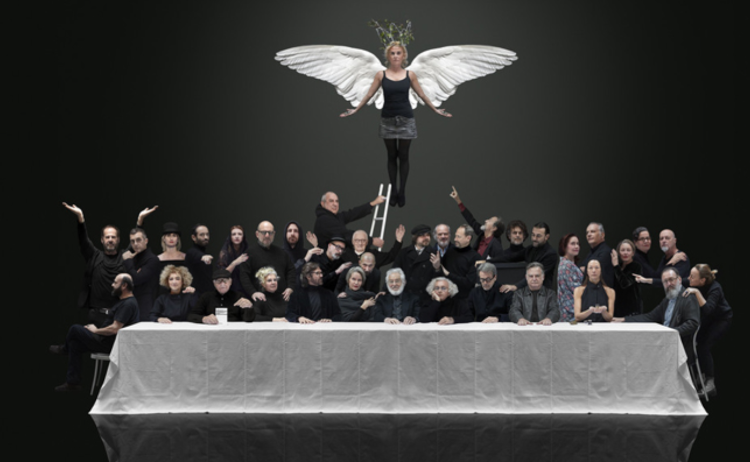
L’immagine vede la tavola (Ultima cena alchemica) piena di personaggi forse in cerca di autore ed in nero (nigredo?) sovrastante una farfalla bianca (albedo?) per giunta femminile (Grande Madre!) attaccata o in segno di, a destra, in rosso (!) il Presidente Gastel con indice alto nell’ evidente ascensione finale (rubedo?).
Al centro il canuto napoletano Mimmo Jodice novello "fratello" Raimondo di Sangro principe di Sanservero con a latere, assisa a destra e dell'emisfero cerebrale, una riconoscibile “Maddalena” del Nazareno-Messia-Maestro.
Messinscena alchemica di trasmutazione, personaggetti scelti e selezionati uno ad uno, qui la Casta sacerdotale dei “fotografi”. A destra alla mensa (!) non in abito talare il barbuto Maurizio Rebuzzini già di Foto/graphia
Il treno perso, ancora uno: Giovanni Gastel
Proprio così: tutto ciò che si poteva perdere (treni navi aeroplano e metropilitano per far rima) s’è perso per incapacità mentale. Punto. Che bello se fosse così: bianco e nero. La vittoria, uso dire, ha tanti padri mentre la sconfitta è orfana. Doppia bellezza!
Incontro il Presidente (AFIP) Giovanni Gastel nello studio di Zuccolin, almeno mi pare chiamarsi, mentre è intento il “Comitato centrale” dell’Associazione fra aromi di cucina già di buon mattino. Infatti nel vano cucina dello Zuccolin studio una cheffa mastriava (si da da fare) tra fornelli e giallo zafferano. E dire che il risotto di giallo erbatico l’avevo provato la prima volta vent’anni prima dei fatti, anni Settanta del Novecento passato a miglior gloria, a più di duemila metri d’altitudine in quel di Sentrieres (Piemonte) dalle mani di zia Lina, sorella di mammà, napoletana di Ercolano: a famiglia, le origini, di Manunzio sono sparse per tutta la Campania, un dì detta Felix. Mah.
Avevo portato seco, mamma mia che poetare, una cartella di fotografie, reportage dell’Ora meridiana e le mostravo a quei fetenti di “fotografi” à la page di moda e réclame varia: eravamo, Cicero pro domo Manunzio, al solito, in anticipo e su i tempi della Milano da bere, provincia della provincia come cantava il Signor G(aber).
Sembrava, anzi, il richiamato Comitato, d’essere osservato più per le fotografie come attrazione circense, da animale in zoo comunale! E l’unico che ci capiva più o meno era Giovanni Ilardo associato al Vezzoli studios lombardo, napoletano d’origine che dell’ora contraria ricordava qualche “fattariello” di gioventù.
E venne lo sguardo del Presidente: uhmm. Il Gastel fotografo di Moda, noblesse oblige, con trascorsi di still life, disciplina iniziatica dei fotografi che tali si dicono. Iniziazione, pensa te, non come i grembiulini di Rito York o Scozzese o vattelappesca. Luce e che luce, pure qua. Una fratellanza di liberi fotografi più che muratoria mestatori! No niente iscrizione a Logge, ci mancherebbe di trovarsi ad avere per “fratello” metti caso Gioele Magaldi, si, quel furbo di tre-cotte “Massoni a irresponsabilità illimitata”; della Milizia (fascista?) Roosevelt durante la furbata del Covid, arma chimica di depopolamento e non la finiamo più.
Sia come sia poi lungo il tragitto degli anni Novanta passati, il Comitato (bella tavola imbandita vedi cover) sotto l’affabile Gastel lasciava gli ormeggi del vecchio associazionismo di fotografi, sempre à la page, per solcare il mare dell’Arte (famose o famigerate, cambio d’ottica dipendente, la sua invenzione: Lectio Magistralis) pensa te, nel momento in cui il Gastel (ne scrissi ad personam) riciclava le sue “istantanee” così la sua autobiografia letta e riletta con riluttanza, di Moda fatte passare, ecco, ad Arte. E ci vuol poco nella Milano d’antan di amici degli amici lo scambio, sempre ad arte si capisce. Maîtresse asserragliante in redazioni di giornali, zoccole rotte davanti e di dietro; richioni, oops checche, impenitenti lo zoo di mostri a fabbricare il nuovo Gastel più bello e gaio che pria: grazie. E grazie al c...omitato nacque pure il nuovo logo AFIP (se vi va raffrontate in rete vecchio & nuovo) che se lo paragonate all’antecedente viene da piangere: time is money e nun ce fa perde tempo. Il vetusto l'espressione di “comitato” mentre il gastelliano a puntini qua e là (e ne scrissi e ne ricevetti dal Gastel “Non ti piace, eh!”) tipico di società allo sbando, e però a Stelle e Strisce because is very nice. No allora ed oggi che son rimaste manco le ceneri AFIP. Dipartito il President, che pure mi aveva scritto e lasciato un bigliettino “vediamoci”. Eh Presidente pur della stessa Classe lei è andato prima per mano del Covid, dicono, quanto a chi scrive...avessi voglia “dopo” ad incontro: basterà una Eternità?
(Copia & Incolla se vi pare)
https://www.manunzio.it/page-d9271
Giovanni Gastel - La ricerca dell'assoluto - Documentari Fotografici #16 - Biblioteca Fotografica
https://www.youtube-nocookie.com/embed/vgNyB6JOl74
“La Fotografia: Arte Applicata”: lectio magistralis di Giovanni Gastel
https://www.cnaviterbocivitavecchia.it/eventi/la-fotografia-arte-applicata-lectio-magistralis-di-giovanni-gastel/
Afip Lectio Magistralis
https://www.afipinternational.com/news/category/lectiomagistralis/
date » 06-11-2023 09:44
permalink » url
tags » status quo ante elisa claps, proteste chiesa trinità potenza elisa claps, immagini torture, street photography vs reportage, stampa e regime, memoria seppellite, memoria corta usa e getta, nati non foste, strage heysel, abu ghraib lager americano, via pretoria potenza elisa claps, suttani centro storico potenza, chiesa trinità elisa claps, rai elisa claps,

Status quo (ante)
E che non è il nome del complesso inglese Anni Settanta trascorsi, lo leggevamo dalle pagine settimanali di musica e altro “Ciao 2000” che all’epoca l'odierno sembrava lontanissimo, e invece…
Status quo ante a dir vero da quella cosiddetta lingua morta, fateci caso tutto un mortorio immaginifico secondo i grembiulini: mala tempo currunt, no? Sì et peiora parantur e finache l’atomica (!) per spianare a Ground Zero1 i palestinesi, tutti civili ben s’intende. Immagine pure questa. E ci sarebbe da fare dotta ed accademica disquisizione se i cosiddetti fotografi, meglio paparazzi voyer e loro paparazzate, si inscrivono nella vetusta categoria del reportage o l’odierno street photography che, come Araba Fenice, esiste ciascun dice ma dov’è e cosa sia nessun lo sa...avanti con gli acquisti.
E torniamo a bomba, ecco. Mattina ancora ‘ndraveglia e suonn’ (assonnati ancora un po’) televisione e Telenorba (meridunal brod cast television) di default (!?) che mostra una manifestazione dinanzi la Trinità; si la “chiesa” di Elisa cui eccidio va in onda, la ricostruzione, su Rai1, cui alcune scene sono state riprese sotto la finestra (campo calcio a cinque) di chi scrive. Cosa c’entra e con un Diary che parla d’immagine, o almeno ci prova? Tutto. Immagine s’è appena detto, e allora…
Stadio belga2 dove avvenne una mattanza calcistica, oggi raso al suolo: occhio non vede cuore non duole. Abu Ghraib3 della bella “donna” Dea Madre molto luciferina, e cosa sennò, torture in Mondo visione: raso al suolo: occhio non vede cuore non duole, no? Avete visto come c’entra, eccome, l’immagine. E per tornare ad Elisa, la Chiesa Trinità (!?) prima lasciata con eterna impalcatura, poi zitti zitti, linda e pinta riaperta al culto (l’abbiamo visitata ma sino alla “sogliola” laterale d’ingresso e non quello su la Main street alias via Pretoria) ma senza messa, e da qui la manifestazione della sua “riconsacrata” usanza. La Massoneria, eh! Occhio non vede cuore non duole, e non possono abbattere, la Trinità, però tutt’intorno le casupole, meglio i “suttan’” abitazioni grotte sotto livello strada tipiche una volta del centro storico cittadino, e quelle sì. Mah!
Ps. Immaginate ancora in piedi la Bastiglia...di certi grembiulini
(Copia & Incolla se vi pare)
1 "Sganciare una bomba atomica su Gaza è un'opzione"
https://www.rainews.it/articoli/2023/11/sganciare-una-bomba-atomica-su-gaza-e-unopzione-bufera-sul-ministro-israeliano-subito-sospeso-6d7e33c4-97bb-4dc1-ad6a-dd1f5a60a030.html
Netanyahu Criticizes Minister Who Suggested 'Option' of Dropping Nuclear Bomb on Gaza
https://www.haaretz.com/israel-news/2023-11-05/ty-article/netanyahu-criticizes-minister-who-suggested-option-of-dropping-nuclear-bomb-on-gaza/0000018b-9e7b-db71-a7df-ffffe4510000
2 Strage dell'Heysel
https://it.wikipedia.org/wiki/Strage_dell%27Heysel
3 Scandalo di Abu Ghraib
https://it.wikipedia.org/wiki/Scandalo_di_Abu_Ghraib
NB. Strano che in nota Wikipedia sovrastante link non c’è traccia della “generalessa” Janis Karpinski a comando del lager, come ai tempi dei “camerati” germanici, niente di nuovo sotto il sole. Rimediamo:
Retired Army Col. Janis Karpinski was one of two officers punished over Abu Ghraib.)
https://edition.cnn.com/2009/US/04/22/us.torture.karpinski/index.html
Last update
“Il destino di quella chiesa lo decideranno i cittadini”: così Gildo Claps durante la protesta contro la riapertura dell’edificio in cui fu uccisa e nascosta sua sorella Elisa"
https://www.ilfattoquotidiano.it/2023/11/06/il-destino-di-quella-chiesa-lo-decideranno-i-cittadini-cosi-gildo-claps-durante-la-protesta-contro-la-riapertura-delledificio-in-cui-fu-uccisa-e-nascosta-sua-sorella-elisa/7344738/
date » 17-10-2023 10:44
permalink » url
tags » aliano provincia matera, valle agri, azienda promozione turistica basilicata, fotografia analogica, epr 64 kodak, agfa scala diapositiva bianco e nero, fotocamera contax rts, contax quartz fotocamera, ottiche zeiss, lenti yashica,
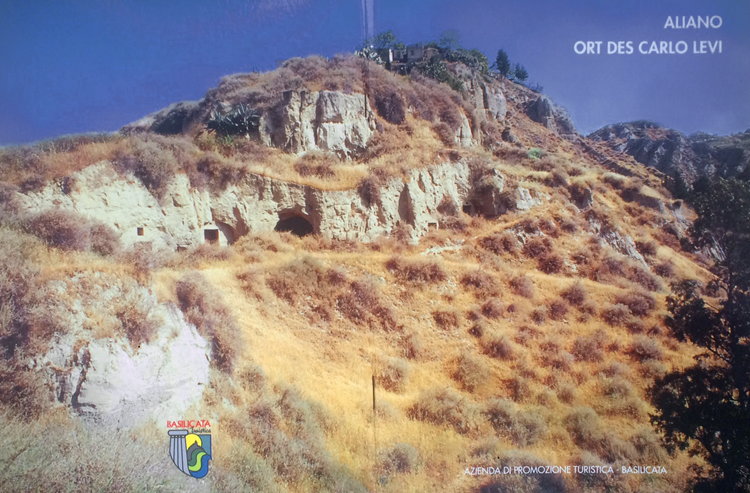
Vexata quaestio, ya, Fräulein Munari & Co. E si perché quando esci dall'urbs/street (extra moenia nulla salus?) e ci provi a fotografare...come chiami allora il davanti: cartolina, nein, reportage geographic style National? Nein. Travel? Oh ya wunderbar.
E vada per travel tanto per non fare il Manunzio quotidiano e inchiodare i minchiapixellisti che devono pure inventarsi, storpiando nomi nel barbaro inglese, qualcosa altrimenti la Giostra degli acquisti tout court s'incazza e di brutto. E i nomi, diciamo così, è Potere. Travel da travailler, altro che old english! e fermiamoci qui.
Travel, dunque.
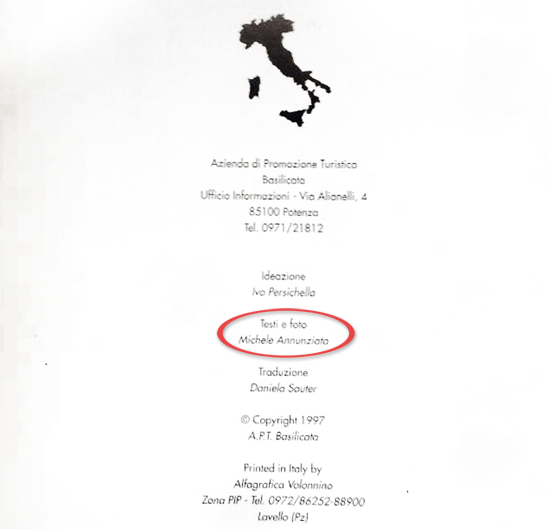 E di un luogo cui fatti tengo a tenermi lontano se non per le cose da presso. Arco riflesso, luogo comune dei soliti imbecilli tutti di andata e di ritorno, si mischierebbero nella solita “casella-pensiero” e buona notte ai suonatori.
Mi chiamò il Responsabile all'epoca EPT poi lestamente trasmutato alchemicamente secondo canone dei grembiulini (salve, come va?) in Azienda Turismo Basilicata, che noi vecchi nostalgici e filologico dire: Lucania. Nomen omen, qualche tempo fa.
Breve mi si chiedeva una veloce pubblicazione su Aliano, e non aggiungo altro e vedi sopra anzidetto, per i “camerati” germanici. Tourist für immer.
Ora dovete sapere che ogni volta che Manunzio provasse per una qualche pubblicazione “turistica” eh avessi voglia a filosofeggiare, ché il richiamato responsabile...sembrava un simposio fra Manunzio, lui, e cerchia di impiegati dell'APT, appunto. Si cominciava d'estate e si finiva a chiacchiere sine die; non vi dico per il calendario cui “discussione” iniziava in primavera e finiva, stampato a gennaio successivo. E d'altronde una volta l'anno iniziava a Marzo!
Caricate le Contax, 139 Quartz e RTS che ancora oggi, cinquant'anni dopo, funziona ancora (!) ed in una la EPR-64 Kodak slide, nell'altra AGFA Scala 200 e via verso la Valle dell'Agri di stupendi paesaggi e valle e acque...poi a salire che sembra una mulattiera verso Aliano, in Provincia di Matera, le nostre “Colonne d'Ercole” lungo a dirsi e non oltrepassabile.
Click di qua e click di là, al solito Manunzio non lesina su gli scatti: una decina di rotoli 135 pari a trecentosessanta immagini una enormità in era analogica e di solo colore, non vi dico la mitica Scala, di nome e di fatto d'armoniche note. E finiamo qui la prima parte
A latere nel riquadro il colophon segnato in rosso Manunzio/Michele Annunziata, ché non riferisce e fotografa “de relato” per chi intende
date » 29-09-2023 17:09
permalink » url
tags » street photography, fotografia notturna, reportage urbano, fotografia digitale, grammatica cinematografica, composizioni fotografiche, umidità relativa, scene urbane, digitale notturno, camedia olympus c 5050, monopod manfrotto,
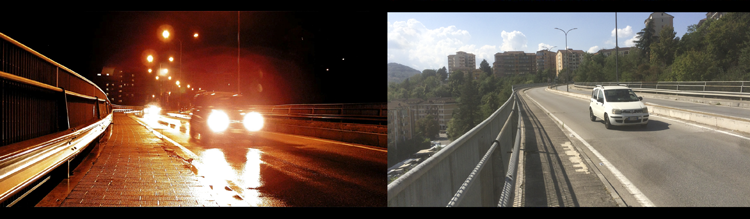
La scena come si presenta durante l'arco del giorno. Reportage già pensato per ricavarne “video” tant'è che le immagini hanno, non altrimenti, grammatica “cinematografica” di campi controcampi etc. Questo a dimostrazione che si fa presto a dire indegnamente street, giacché è reportage gustabile, malia diversa, se fisse a muro o su libro prossimo a venire ma tutte immagini con un certo gusto fotografico oggi bandito al posto di sciatteria eterodiretta: Web docet e non solo
Nottingham
Notte e pioggia da stare al coperto, invece Manunzio con la sua fidata Olympus C- 5050 (piccoletta e molto Leica style con suo 1.8/35 millimetri equivalente FF) il Monopod Manfrotto, e via sotto l'acqua. No, anzi no, ché trovato un bel spiovente balcone al riparo si è “immortalato” la scena. Poi smesso di piovere il resto delle immagini.
Sì, vero lo street presuppone “persone” che si muovono s'agitano pascolano ruminano e vivono. E ma persona è dal latino Persona/Personae....maschera teatrale alla lettera che poi prese valore di “individuo” “corpo” e usata come termine grammaticale e teologico.
Infine per noi di vecchia scuola le immagini, qui cittadine ma come ogni altro genere e in ogni dove, s'iscrivono ancora nel francesismo “reportage”
Link video
Ps. Il video (sorta di story-board tant'è che ne esistono diverse versioni e lunghezza anche bianconero per "tastare" gusto e quant'altro) in link è un francobollo ché non amiamo yotubate e altro. E può verificarsi che in base all'OS Mac/Win la visone avvenga solo a seguito di scaricamento file come fosse semplice allegato. Comportamenti del tutto normali.
No Final Cut, No Premiere, No Da Vinci Resolve
date » 21-09-2023 11:07
permalink » url
tags » deo gratia, munari fotografia, america way of life, fotografia bianco e nero digitale, matt black photographer, new deal america, thumberwald, stampa e regime fotografia, reportage vs street photography, nu jurno me jette da la casa, america dream, massoneria mito america, ercole pomodori esperidi, cristoforo colombo america, columbus day, cia & mossad intelligence, felix, columbus day, dorothea lange, schwab klaus davos,

Nu juorno me jette da la casa...
...e invece di venn' e spingule francese (safety pin) m' mettiett' a fa futugrafie. E uno dice cosa buona e giusta e fonte di salvezza...Manunzio non siamo in chiesa durante il rito eucaristico. Vero, sa certe scantonate...Oh quanto a queste lei è sublime Maestro, vede con Maiuscola, pure!
Vabbene siamo seri in un mondo di scissi ché dire pazzi offesa è. E allora un giorno il solito 'mericano, racconta la Munari, dalla sua Central Valley da presso la Silicon(e) pari valle e l'altrettanto fallita banca**? Non indaghiamo perché altro ci preme. Quindi il nostro che di nome fa Matt Black, così sottoscrive la Munari che ce ne informa via Newsletter, va via di casa...il resto lo potete legge che altro, ancora, ci preme. E quindi una seconda volta, dopo le baggianate scritte dalla nostra Vestale Munari & Co, il Matt con sua macchina fotografica e ci sfugge il brand(y) on “the road” scopre l'America, sai che novità. No quella, come dire: diseredata così l'aulico vocabolo del politcally correct da sbiancare i già imbiancati sepolcri, pieni ogni putridume etc etc etc. Viaggio lungo metri e metri, poi chilometri, yarde, miglia terrestri ché le acquatiche sono più lunghe, e click clickete. Ora e da seduti solo a volerlo si “sfoglia” Internet, eh avessi voglia a vederne di poverty: tendopoli in ogni dove e pure in posti blasé dove pascola la Upper Class.
Però mentre queste ultime immagini da web sono colorate, Mat ne fa in bianconero “didascalico”. E quindi di cosiddetta e vetusto denuncia, nientemeno, sociale? No. Di quelle della Grande Depressione o Farm Security alla Dotorthea Lange? None, eh babbioni che altro non siete. Birichini.
Fuori di denti quello fu, poi, il New Deal americano keynesiano anni Trenta secolo scorso, oggi imperante il Nulla, giacché dice Klaus Schwab e suoi Davos Boy: nuje, dice, simm' diventat' cumm a Ddje, e de vuje popolo nun ce pass' manco po c...apa vabbè un po' più giù.
Senza farla lunga il Matt(acchione) ha fatto Tombola, oops Bingo. E proprio quelle immagini di “denuncia sociale” riceve plauso di e dei ricchi amici degli amici; premi et cotillon. E da chi? Anzitutto da Stampa & Regime 'merican', per nientepopòdimenoche (così una volta il dire) roll drums please: Magnum Agency dei soliti babilonesi già del debito guerre, dei vaccini e...non la finiamo più. E bravo Matt(acchione) brava pure la nostra Vestale Munari a darcene “notizia” forse da ufficio stampa Cia & Mossad ché le guerre anche soprattutto con la “cultura” si fa. Morale fate come vi dice manu militari la Vestale!
Ps. Immagini di atomi vaganti, scatti da cartolina very nice with allure. Trompe-l'œil e nulla più, e altra cosa dal reportage: qui siamo, de facto, nel dogma Cancel Culture per chi ha capito l'antifona “sociale” se uno sa e conosce le Scritture, nonché il “mito” che va a cogliere i pomodori nel giardino delle Esperidi qualche giorno prima di Cristobal Colon (Colomba da Babilonia) cui l'America festeggia (!) ogni anno il 12 Ottobre da quel lontano 1- 4 – 9 - 2 che è tutto una “scoperta” dell'America cui il nostro Matt(acchione) ne è figlio: core a core con Munari & Co. Babylon style...oops Amerika (k as killer) way of life. Nazione indispensabile al besenisse rapace.
Pss. Il titolo è la canzone “Spingule francese” scritta dal poeta Salvatore Di Giacomo, napoletano d'antan
(Copia & Incolla se vi pare)
Matt Black: American Geography
https://saramunari.blog/
**Fallimento della Silicon Valley Bank
https://it.wikipedia.org/wiki/Fallimento_della_Silicon_Valley_Bank
date » 19-09-2023 18:56
permalink » url
tags » ieri oggi domani, sacre scritture ideologia capitalista, via pretoria potenza, urbs vs pagus, lager nazisti, depopolamento kalergi, malthusianesimo, città quindici minuti, fotografia analogica, fotografia digitale, storia di gente, amarcord, memorie novecento, cancel culture eterodiretta,
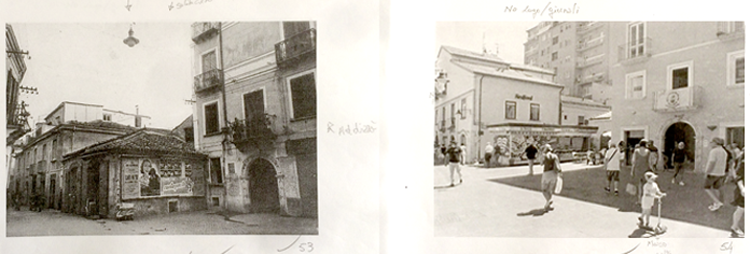
Uno slargo più che vera e propria piazza della Trinità (Potenza, Lucania) in soggettiva dalla porta d'ingresso su la Pretoria: a sinistra la città racchiusa ancora nelle sue mura novecentesche, qui la rimessa di meccanico. Controcampo a destra l'odierno “struscio” anche “monopattizzato” così l'andare e venire delle suole lungo la Main-Street cittadina: bipedi più o meno senzienti al pascolo brado. Singoli monadi in collisone perenne con l'evangelico Prossimo, funzionale, tuttavia, al Sistema e ben altra cosa con il “sentimento” di appartenere, un tempo, allo stesso destino di classe. Compatire dal latino cum + patire. Sentire insieme empatia, pari “dolore”. Universi ieri contrapposti all'odierno di cellule/organismi tumorali sul piano fisico, specchio della “pazzia” del circondario che l'intimo percepisce struggendosi mentre sfoca in neoplasie e altre “moderne” patologie. L'urbs contro il resto del terraqueo: ideologia presa di peso dalle Sacre Scritture, e certa idolatria già della Polis greca
Memorie del Novecento
Terminate le riprese still-food: da Maggio a ieri diciotto settembre, Anno Domini duemilaventitré di qualche migliaio di frame della visone mangereccia e non solo di Manunzio.
Sicché ritornati alle tastiere, eccoci , allo street. Dunque (qui cosa noi intendiamo per esso, il genere si ma acculturato) se vogliamo continuare il giochino “facciamo finta che” lo street del Sistema sia cosa buona e giusta, sebbene ammorbante per Web, altro non è che la riproposizione, mica poi tanto sottesa, della millenaria lotta urbs vs il fuori le mura: pagus che campus, silvestre foreste, acque di ruscelli fiumi e laghi dove nei pressi pure si accampava l'esistenza della “plebe”. Sicché parafrasando Vaticano Spa: Extra moenia nulla salus?
Insomma immagini all' Amarcord stile ieri ed oggi ché di diman' non ve certezza? No manco per il c...aricatore un dì analogico odierno “fail” digitale a confronto. Memori, infatti, del' orwelliano “ Chi controlla il passato controlla il futuro. Chi controlla il presente controlla il passato” del (Potere/potentati/stampa & regime/web). E sì la “città di 15 minuti” che non può essere New York Londra Parigi Battipaglia si cambia...a meno di volare! Riproposizione, pure questa, dei lager nazisti alla Mengele l'Angelo della Morte (già a prestito dall'ideologia liberticida del Novecento Stars & Stripes) per il controllo Urbi et Orbi fin + a + nale, via chip sottocutanei...non si poteva vendere e comprare da Apocalisse 13 e seguiti. Tutto qua e pare niente, certo al solito: paisà appizz' e recchie. In campana, eh!
Ps1. Le immagini quasi quattrocento scelte dovevano servire a story-board di video: una galoppata lungo un secolo della città (Potenza, Basilicata altro nome d'una strana terra/regio italica) cui si vive. Impresa titanica, giacché esistono clip di “assaggio” che definire una faticaccia è offendere il vocabolo. Oltre al fatto che il video adesso c'è e...domani? Resta allora una scaletta una sceneggiatura in formato cartaceo, sic et simpliciter, che altrettanto non vedrà mai luce ad offset digitale per le Rotative degli amici degli amici, ahh si capisce.
Ps2. Questione di “suoni” lo street, de facto cartolina di turisti “acculturati” con digicamere, oggi ma pure redivive analogiche from Amerika way of life. Sembra H. Cartier Bresson e suo attimo fuggente “Carpe diem”? Niente di tutto questo che “cultura” a parte certuni prezzolati etero-diretti, dopo trasmutato alchemicamente il reportage in street, ossia il Nulla, gongola su gli stessi passi (assassino torna sempre sul luogo del delitto, no?) e luoghi alias New York High and Lower Manhattan in primis. E reitera ossessiva la fotocopia di precedenti fotocopie, funzionale ai dettami del depopolamento mentale/etico formato Cancel Culture, ché il resto è "mancia". Lato traslato e fate come vi pare
