
date » 01-10-2026 09:22
share » social
Via Roma
(In Italy, elementary schools traditionally opened their doors precisely today, the first of October)
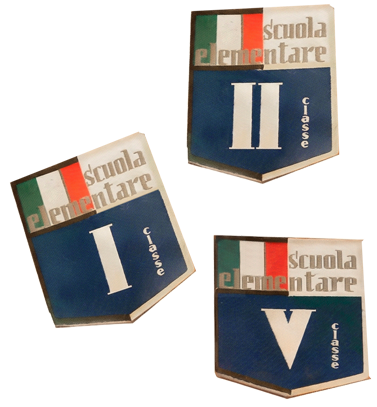 Every morning, the series of winding sidewalks and twisting pedestrian crossings leads black smudged aprons toward the elementary school on Via Roma. White collars, both starched and synthetic with butterfly buttons, float above red ribbons and shields pinned to chests—where white numbers on a blue background in Roman numerals identify the grades. Swarms pour out from the school alleys, leather satchels and cardboard cases spinning through the air like festive swords. Chases and trading card (Album Panini of footballers) swaps yield to the school bell, which punctually puts an end to the pandemonium and disperses small troops along the Popolo staircase. Beyond the glass doors, silence reigns supreme. Like carapace, the grandmother-mother-teacher Madam Forlenza kicks off the day with a prayer oozing same boredom and the dust of as old maps on wall. ...continue...
(In Italy, elementary schools traditionally opened their doors precisely today, the first of October)
Every morning, the series of winding sidewalks and twisting pedestrian crossings leads black smudged aprons toward the elementary school on Via Roma. White collars, both starched and synthetic with butterfly buttons, float above red ribbons and shields pinned to chests—where white numbers on a blue background in Roman numerals identify the grades. Swarms pour out from the school alleys, leather satchels and cardboard cases spinning through the air like festive swords. Chases and trading card (Album Panini of footballers) swaps yield to the school bell, which punctually puts an end to the pandemonium and disperses small troops along the Popolo staircase. Beyond the glass doors, silence reigns supreme. Like carapace, the grandmother-mother-teacher Madam Forlenza kicks off the day with a prayer oozing same boredom and the dust of as old maps on wall. ...continue... 